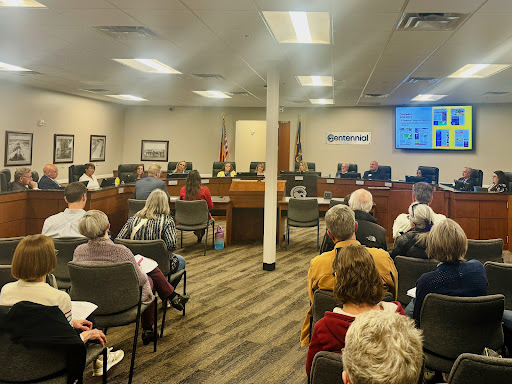
Centennial homeowners Kyle and Elizabeth Coatney now have the option to build an in-law suite on their property so their parents can live comfortably and affordably as they age. The city’s mayor and council voted 9-0 to pass an ordinance allowing the construction of accessory dwelling units, or ADUs, as long as they meet regulations outlined in the plan.
For the Coatneys, who expressed their family’s support for ADUs during public comment at the meeting, the approval brings a sense of relief. It means their parents can retain their independence while having family nearby who can support them. It also means their children can spend more time with their grandparents, strengthening the inter-generational bond between them.
“Thank you for advancing this ordinance so that families like ours no longer have to live in this limbo and can reassure our aging relatives that there is a dignified, independent option where they can age close to family,” said Kyle.
Not everyone supports the idea for Centennial. Patrick Larzik told the council ADUs would destroy neighborhoods.
“It’s not going to be the neighborhood that I’d want to move into again,” said Larzik. “If I have apartment houses on both sides of me because that’s what it’s going to turn into, you might as well just build the projects.”
Even if the council had defeated the ordinance, it seems ADUs are inevitable – not just in Centennial but in many populated parts of Colorado.
The Colorado legislature passed a bill this week requiring municipalities with more than 1,000 people and portions of counties with greater than 10,000 to allow one ADU per single-family detached home. Property owners will have to seek approval for the addition according to the jurisdiction’s guidelines.
Centennial Mayor Stephanie Piko acknowledged that the state requirement supersedes the city’s decision but said “having an ordinance in place prior to the governor signing the ADU, is the best defense that we have going forward.”
“Even if our ADU bill isn’t perfect, we can change ours,” she added.
Piko stressed that city planners and council members would listen to homeowners as the law goes into effect and, if necessary, change the regulations outlined in the ordinance.
ADUs are defined as a second, subordinate dwelling on the same lot as the primary residence with a separate entrance, kitchen, and bathroom. They can be attached to the house, like in a basement or an addition, or detached, like in a backyard cottage or separate garage.
To pass Centennial’s approval, the ADU must:
- Receive a building permit
- Follow municipal code
- Not be a temporary structure or an RV
- Fit within existing setbacks: the area from the property line or house to the structure
- Fit within the maximum lot coverage
- Be smaller than 50% of the footprint of the main home
- Have a maximum height of 17 feet
- Match external features to the main home
- Provide one off-street parking space
- Have a separate address from the main home.
Homeowners and civic associations can enforce stricter regulations or ban ADUs through their private covenants.
Each council member acknowledged the time and thought that went into developing the regulations and said that while many had reservations initially, they now believe the city is ready for the change.
“We didn’t do this overnight or quickly,” said Councilmember Don Sheehan. We’ve been contemplating the impact of ADUs on your neighborhoods and houses, and we’ve got professionals who have really spent a lot of time working on this ordinance. I think we’ve covered a lot of areas. If we have something we’ve missed or something that has become a chronic issue, we’ll fix it.”