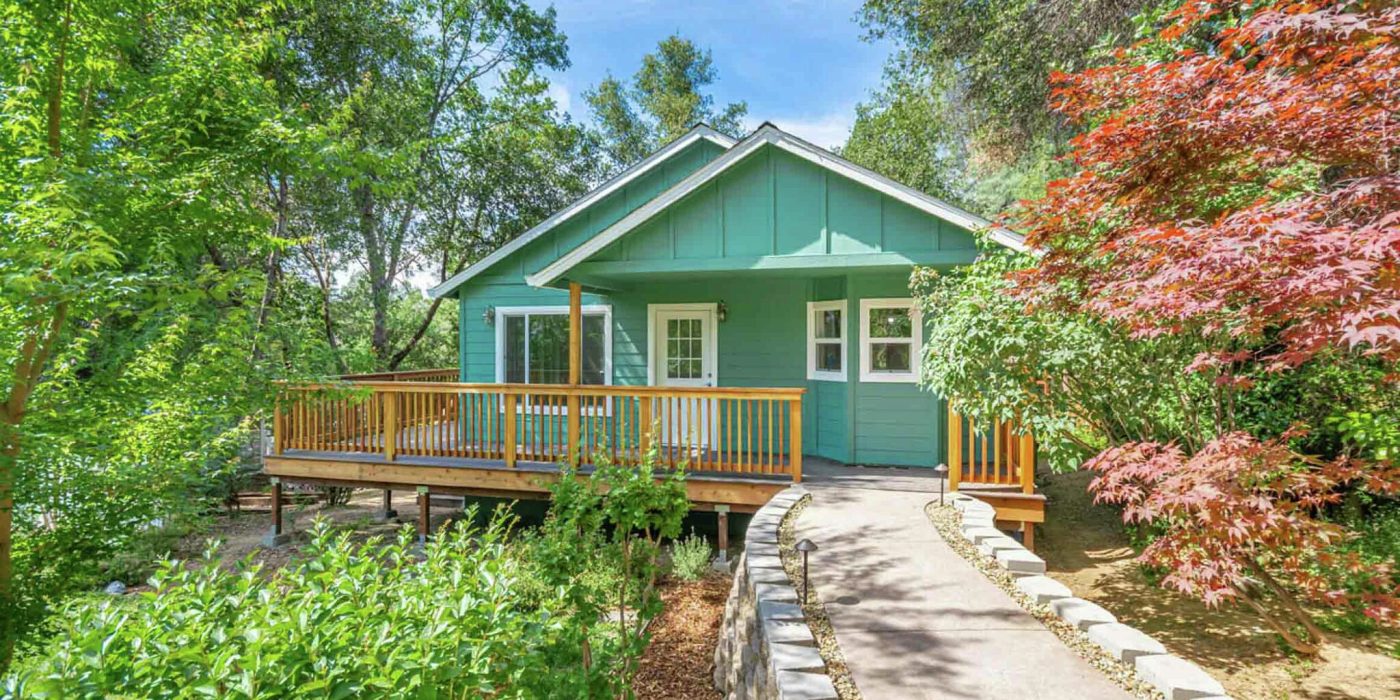
Accessory dwelling units serve as secondary homes and can be detached from or attached to the main dwelling unit on a property.
Tiny Nooks
NORWALK — After moving back into the Norwalk home he grew up in, Todd Ackert hopes to stay on the property with his aging parents by building an accessory dwelling unit, or ADU.
“I have recently moved back into my childhood home that my parents purchased 50 years ago and still currently reside in,” Ackert told the Planning & Zoning Commission at its April meeting. “As they get up in their older advanced years, they started to research ways and places to go — retirement communities. … They decided an ADU might make sense on their property. They purchased a house, raised two kids, paid it off and love this area. They do not want to leave.”
Families like the Ackerts may soon find it easier to create accessory dwelling units under new city regulations aimed at encouraging more homeowners to build them. The changes increase the maximum allowable size for ADUs and streamline the approval process, city officials said.
“This is hopefully just a way to encourage more folks to be able to build ADUs on their properties and make that process a little bit less painful,” said Bryan Baker, Norwalk’s principal planner.
Accessory dwelling units can be attached to a single-family home, located within it or built as a separate structure elsewhere on the property. Under city regulations, the property owner must live on-site.
Norwalk opted out of the state’s ADU regulations in 2022 and instead adopted its own local rules.
Under the updated regulations, ADUs can now be up to 1,000 square feet, up from the previous 700-square-foot limit.
“We’ve seen the detached ADU regulations in place for a few years now,” Baker said, “and the 700-square-foot number works but it seems to be a little bit tight in terms of what folks can fit into the ADU. So we’re going to hopefully provide a little bit of breathing room.”
The new rules also allow detached ADUs to align with the setback of the main house, as long as they are not built in front of it.
“The idea is you can’t put your detached ADU directly in front of your house to block it from view,” Baker said. “Ideally, the principal structure is supposed to remain principal and be a focal point of your property, and then the accessory dwelling unit can be located to the side.”
Another major change eliminates the need for Planning & Zoning Commission approval for detached ADUs that meet setback requirements. Instead, qualifying projects can now be approved by Planning & Zoning Department staff, similar to the process for garages or home additions.
The updated regulations also remove parking requirements for ADUs, meaning homeowners no longer need to create additional parking spaces to build one.
Baker said the parking requirement had been one of the biggest deterrents to ADU construction. Many properties, he said, have only a single wide driveway leading to a one-car garage built close to the setback, leaving little or no room for extra parking.
Mayor Barbara Smyth said ADUs are not a complete solution to the city’s housing affordability challenges, but they can help expand housing options.
“There is no single fix or magic cure for the housing affordability crisis,” Smyth said. “That means we have to be creative and willing to pursue practical, commonsense solutions that can chip away at a problem burdening families here in Norwalk and in communities across the country. Making it easier for homeowners to create accessory dwelling units is one meaningful step we can take.”