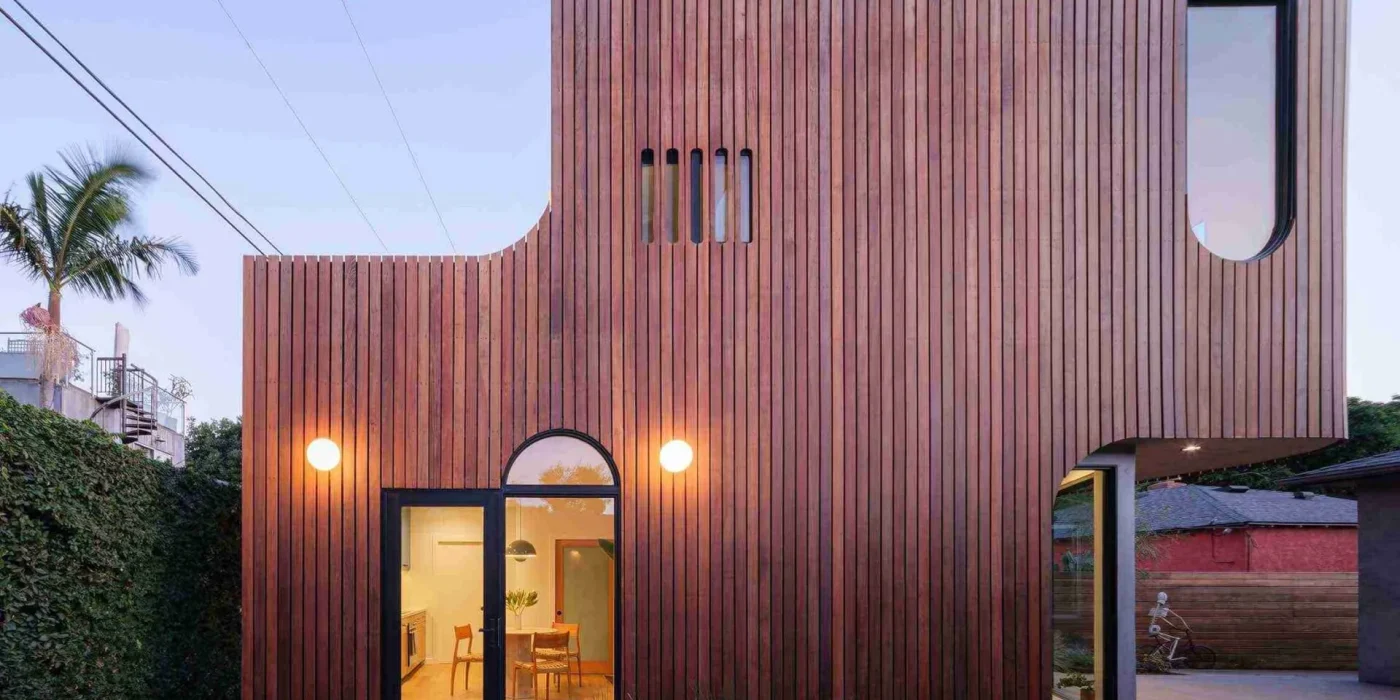
Designed by Byben, the Offset ADU (Accessory Dwelling Unit) transforms compact residential living through a carefully crafted balance of architecture, landscape, and flexibility. Built on the footprint of an existing garage, the 79-square-meter accessory dwelling unit was conceived as a standalone structure instead of a direct addition to the main house. This strategy allowed the project to introduce a bold sculptural presence while transforming the backyard into a more dynamic and usable environment.
Created for a family seeking additional living space, including a media room and flexible bedroom-office, the project demonstrates how thoughtful design can maximize both indoor functionality and outdoor experience. Through innovative spatial planning, refined material detailing, and creative responses to planning restrictions, Byben delivers a contemporary interpretation of California’s evolving ADU movement.
Designing Around Site Constraints
The defining architectural feature of the Offset ADU emerged directly from the limitations of the site. Overhead power lines at the rear of the property required an eight-foot clearance radius, while zoning regulations demanded a four-foot setback from the property line. Instead of allowing these restrictions to compromise the design, Byben used them to shape the building’s unique form.
The upper level was offset to create a covered entrance below and a spacious outdoor deck above. Connected to the second-floor hallway, the deck functions as a flexible extension of the interior, suitable for working, dining, crafts, or relaxation. The side setback was transformed into a landscaped strip for bike storage and new planting, adding greenery while softening the building’s geometric edges.
Dividing the Backyard Into Three Distinct Zones
Although the ADU reduced the overall size of the backyard, its strategic placement allowed the outdoor space to become more diverse and functional. By positioning the structure at the corner of the site, the backyard was divided into three interconnected zones with different uses and spatial qualities.
A transitional deck between the main house and the ADU creates a seamless connection between the two buildings. Positioned flush with both interior floor levels, the deck strengthens indoor-outdoor continuity and acts as a shared social space. Beyond this area, the rear yard became more private and active through direct access from the ADU’s kitchen, which opens through expansive floor-to-ceiling glazing. Meanwhile, the former driveway was repurposed into an open recreational zone for exercise, children’s play, and informal gatherings.
The use of varied materials across these outdoor spaces adds texture and identity, enhancing the layered experience of the backyard.
Flexible Interiors for Contemporary Living
Versatility and flexible design were central to Byben’s design approach. The ground floor combines the living room, dining area, and kitchen into one open-plan volume that can easily adapt to changing daily activities. This multifunctional arrangement maximizes openness while making the compact footprint feel larger and more connected.
On the upper floor, the L-shaped bedroom-office was designed as a hybrid environment capable of functioning both as a workspace and guest accommodation. A Murphy bed and integrated desk allow the room to transition effortlessly between uses. The adjoining outdoor deck further expands the usable living area and encourages residents to spend more time outdoors.
Materiality and Refined Architectural Detailing
The Offset ADU combines conventional California stick-frame construction with carefully executed detailing and warm material contrasts. Structural steel supports the front cantilever, while the exterior palette blends smooth stucco with rich Ipe wood rainscreen cladding.
One of the project’s most distinctive features is the custom U-shaped window within the upper-level bedroom-office. Positioned high against the parapet, the opening frames uninterrupted views of the sky while filling the room with natural light. Wood-lined shadow-box detailing and a mirrored soffit ceiling amplify the sense of depth, creating a visually immersive spatial experience.
The installation of the Ipe cladding required meticulous craftsmanship, particularly around the precisely measured window cutouts. These refined details contribute to the building’s sculptural character and elevate the tactile quality of the architecture.
A Contemporary Vision for Compact California Housing
The Offset ADU reflects the growing importance of accessory dwelling units within California’s residential landscape. By introducing a second living unit onto an existing property, the project contributes to increased urban density while maintaining strong connections to outdoor living.
Byben’s design also embraces a smaller environmental footprint through compact planning and a strong emphasis on activating exterior spaces rather than expanding interior volume unnecessarily. Through its adaptable layout, layered landscape strategy, and expressive architectural form, the Offset ADU presents a contemporary model for compact living that feels both highly functional and architecturally distinctive.
Credit: Byben