Local governments must quickly approve legally submitted applications to build accessory dwelling units, or ADUs, alongside an existing or planned residence, a state appeals court ruled in a victory for advocates of more housing and less governmental review.
Based on the ruling, Christopher Elmendorf, a UC Davis law professor, told the Chronicle on Monday that a city that was found to have wrongly rejected a housing application would have to pay damages to the developer. Previously, he said, a city faced damages, in limited amounts, only if it unsuccessfully appealed a Superior Court judge’s approval of housing construction.
The coastal suburb of Palos Verdes Estates in Los Angeles County violated a homeowner’s rights by taking more than three years to approve his application in 2020 to build an ADU next to his home, the 2nd District Court of Appeal ruled Friday. The city, one of the wealthiest in California, repealed its regulations around the time it also granted a permit to the homeowner, Wei Shi, but Shi said the delay cost him hundreds of thousands of dollars in property value, loss of use, construction and other expenses.
State law “imposes a mandatory duty on local governments to promptly and ministerially consider and approve ADU permits,” Justice Nicholas Daum wrote in the 3-0 ruling, reversing a Superior Court judge’s decision in favor of the city. “Ministerial” approval allows construction to proceed if the project meets basic state legal rules such as design standards and zoning laws, without allowing local officials to impose additional requirements.
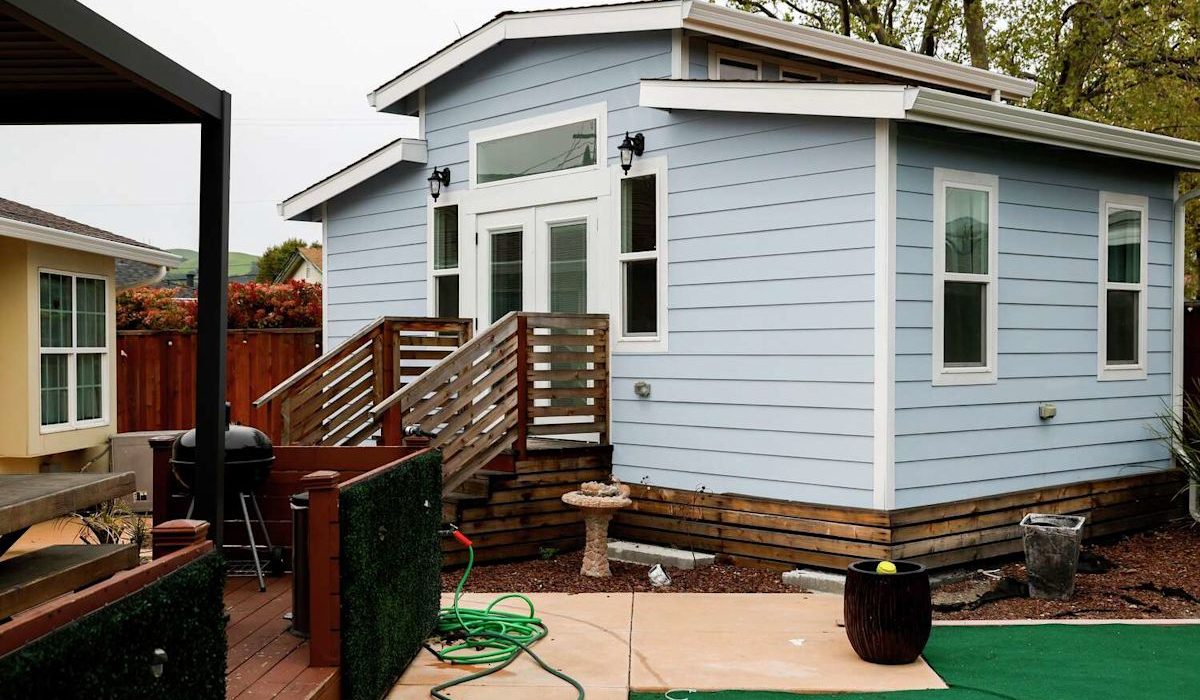
Palos Verdes Estates in Los Angeles County violated a homeowner’s rights by taking more than three years to approve his 2020 application to build an ADU next to his home, the 2nd District Court of Appeal ruled Friday. (Michael Macor/The Chronicle)
State law is intended “to encourage homeowners to apply for permits and build ADUs without undue interference from local governments,” and to “protect against the delays that Shi suffered,” Daum said.
Homeowners can rent an ADU to anyone, but often use them to house family members and caregivers. Residents must stay in the dwelling for more than 30 days under state law.
Shi, who works in real estate, gained the city’s approval in 2023 and now has an ADU next to his home. In addition to letting him seek damages, the ruling means that local governments are “forbidden from putting up new obstacles for new homeowners,” his lawyer, Jeffrey Lewis, said Monday.
And it could be a “huge decision” affecting other California laws requiring ministerial approval for housing developments, Elmendorf, said in a posting on X. He cited SB423 by Sen. Scott Wiener, D-San Francisco, a 2023 law allowing state housing officials to approve multifamily projects that are not in coastal areas, and AB2011 by Assembly Member Buffy Wicks, D-Oakland, a 2022 law that removed some barriers to housing construction in business districts.
Lawyers for Palos Verdes Estates were not immediately available for comment. The city could seek review of the case in the state Supreme Court.
Subscribe
There’s more to San Francisco with the Chronicle. Subscribe today for just 25¢.
This article originally published at ADU ruling could be a boon to California builders.