Rochester, Minnesota authorized accessory dwelling units in 2023, but three years later the program has produced fewer than a dozen building permits — and city officials are already questioning whether it needs to be rethought.
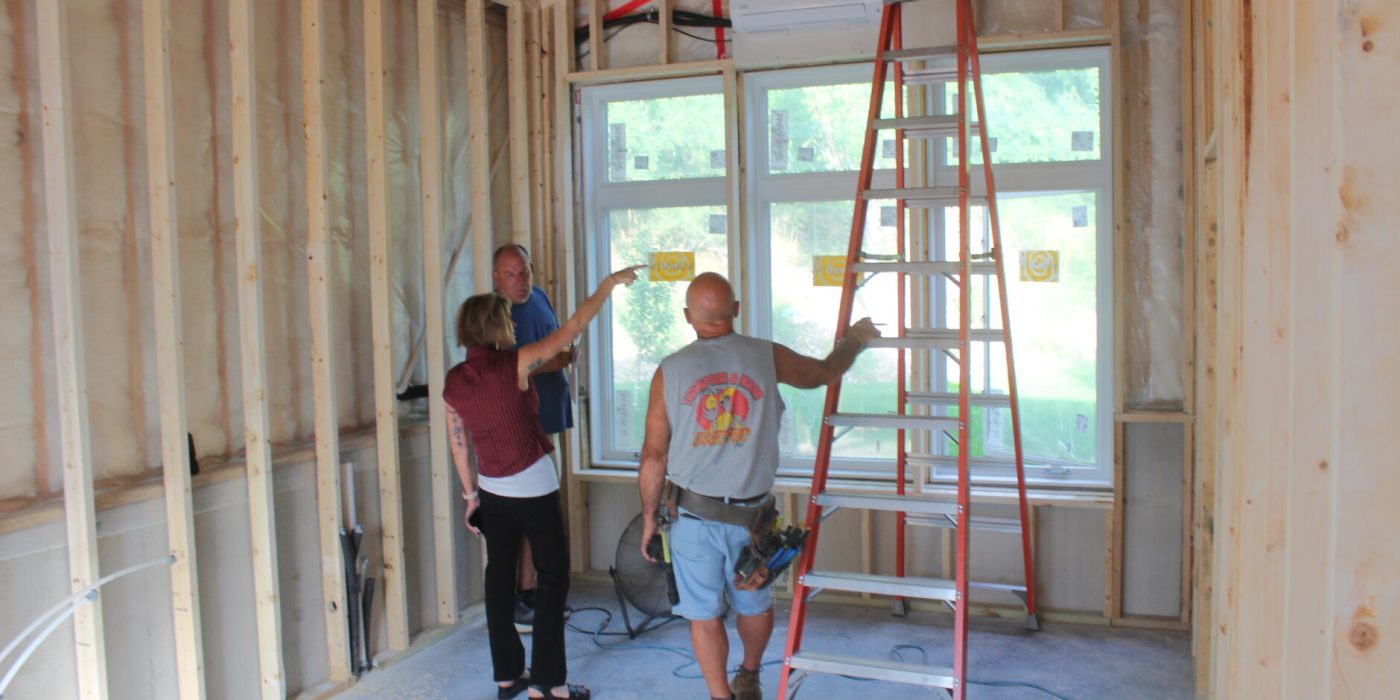
The core problem is cost. Jennifer Thicke, a northeast Rochester homeowner currently building a 560-square-foot unit, estimates her project will run $250,000. She’s justifying the investment by using the space as a hair salon, funded by the sale of her previous business. The ADU is being built to eventually convert to rental housing, but income potential alone wouldn’t pencil out. “It’s more than I thought it would be,” she said.
That’s a common reaction. Taryn Edens, Rochester’s assistant director of housing and development, notes that interested homeowners routinely underestimate what a full dwelling unit costs. “It’s usually going to be over $200,000, if it’s detached,” she said. A city pilot program offering up to $20,000 in fee reimbursements for affordable rental ADUs draws inquiries every week or two — but so far, not a single applicant has moved forward.
The Olmsted County Housing and Redevelopment Authority may become the first to actually test that pilot program, after a narrow 5-3 board vote to move ahead with a 392-square-foot ADU on one of its 40 rental properties. Construction is estimated at $180,000 — a number that surprised even the county’s own housing director, David Dunn. “The first time I heard that number, my jaw dropped,” he said. He attributed the cost to the fact that all the systems in a small unit — plumbing, electrical, HVAC — cost roughly the same to install regardless of square footage. At an anticipated rent of $1,200 a month, the return on investment is projected at 20 to 30 years.
Not all ADU motivations are financial. Bigelow Homes built two ADUs into new construction in a 2022 subdivision; both buyers used the space for personal needs — a nanny suite and a home office — with an eye toward housing aging parents later. Real estate agent Robin Gwaltney says multigenerational demand is a consistent theme, particularly among families drawn to Rochester by Mayo Clinic employment. “A lot of people moving to Rochester are moving here because their grandkids ended up here,” she said.
The 11 permits issued to date include some lower-cost conversions. Brad Murphy renovated a partially finished basement into a studio apartment for roughly $20,000, finding the ADU approval process simpler than his earlier attempt to create a duplex in the same home. Eight of the 11 permits are in R1 zones, with most attached to or renovated from existing structures.
City staff and county housing officials agree that Rochester’s owner-occupancy requirement — which mandates that at least one unit on the lot be owner-occupied — is the single biggest constraint on ADU growth, particularly for county rental properties in R1 zones. Whether the city council will modify that requirement will be discussed at a September 28 study session.
“I think we do recognize that perhaps our program needs to be rethought,” Edens said.